Delete Before Sending: The Quiet Tragedy of Curating Your Life Before You've Lived It
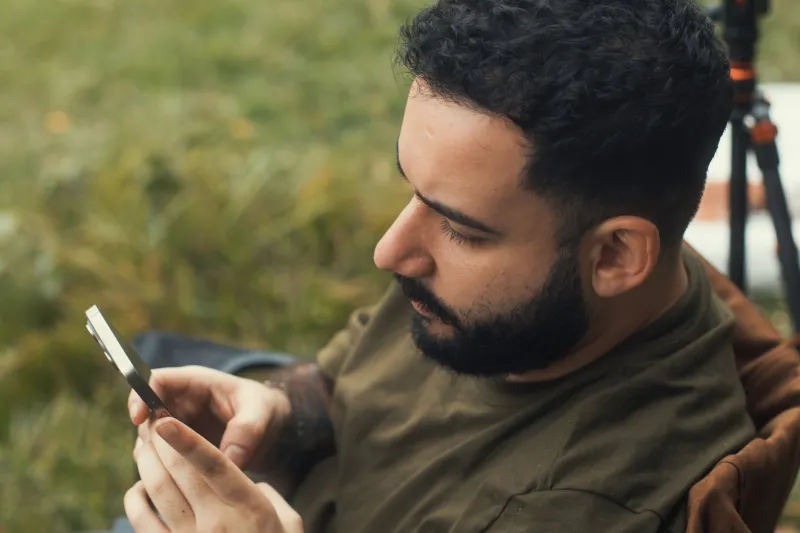
Something happened at my cousin's wedding last summer that I haven't been able to stop thinking about. My aunt — sixty-three years old, a woman who once slow-danced alone in a Kroger because a good song came on — started crying during the vows. Real crying. The ugly, snotty, shoulder-shaking kind that means something. And before the tears had even finished falling, she was reaching for her phone to check whether anyone had caught it on camera. Not to relive the moment. To decide whether the moment was worth keeping.
That's where we are now.
The Edit Suite We Carry Everywhere
We have been handed an extraordinary amount of power over our own narratives. Instagram lets you archive posts you regret. Twitter — sorry, X — lets you delete the thing you said in anger before most people see it. iMessage has an unsend feature now, as does Gmail, as does Slack. Snapchat built an entire empire on the premise that nothing has to be permanent. TikTok drafts pile up like unsent love letters. We are, at any given moment, one tap away from erasing ourselves.
The technology was sold to us as liberation. No more cringe. No more permanence. No more being held hostage by the worst version of yourself at your worst moment on your worst Tuesday.
But here's what nobody put in the press release: when you can edit everything, you start editing everything. Including the stuff that was never supposed to be edited. Including the raw, unpolished, unrepeatable seconds that used to just happen to you and make you who you are.
Jordan Foss, a content creator based in Austin with a following that sits just north of 400,000, told me she sometimes films the same "candid" moment four or five times before she feels comfortable posting it. "I know that sounds insane," she said, laughing in a way that didn't quite reach her eyes. "But the first take is always too real. Too much. People say they want authentic, but what they actually want is authentic-adjacent. Authentic with the rough edges sanded down."
The Anxiety of the Unfiltered Moment
Therapists are noticing this too. Dr. Camille Reyes, a licensed psychotherapist in Chicago who works primarily with millennials and Gen Z clients, says she's seen a significant uptick in what she calls "documentation anxiety" — a low-grade dread that follows people into experiences they should, by all accounts, be enjoying.
"I have clients who can't fully inhabit a concert, a first date, a vacation, because part of their brain is already in post-production," she told me. "They're thinking about the caption before the moment is over. And what that does, neurologically, is pull you out of the present tense. You're not having the experience. You're already managing it."
This isn't just a social media problem, though social media certainly turbocharged it. Writers feel it too. There's a particular paralysis that sets in when you know — or suspect — that everything you put down might one day be searchable, screenshotted, quoted back to you in a context you never imagined. The result is a kind of pre-emptive self-censorship that operates at the level of lived experience, not just on the page. You don't just edit the essay after the fact. You start editing the life that the essay would have been about.
Marcus Webb, a poet and essayist from Philadelphia whose work has appeared in several literary journals, described it to me this way: "I used to keep a journal that was genuinely ugly. Embarrassing thoughts. Half-formed ideas. Stuff I'd never show anyone. And then I started a newsletter, and somehow the journal got cleaner. More presentable. Like even in my private writing I was performing for a future audience that didn't exist yet. I'd lost the one place I had to be completely unwitnessed."
What Gets Lost in the Draft Folder
Here's the thing about unwitnessed moments: they're where most of the good stuff actually lives.
The best stories — the ones that crack people open when they read them, the ones that make strangers feel less alone at 2 a.m. — almost never come from the polished take. They come from the accidental confession. The thing you said before you thought better of it. The journal entry you wrote when you were too tired to perform. The letter you sent before you could talk yourself out of it.
Raw writing, real writing, the kind this site exists to celebrate, requires a willingness to let the moment be what it is before you decide what it means. It requires you to live first and narrate second. And that sequence — live, then narrate — is under genuine threat.
Because now we can narrate in real time. We can construct the story while it's still happening. And the story we construct in real time is almost always a safer, blander, more palatable version of the truth.
Living Without a Safety Net
I'm not here to tell you to delete your apps or embrace some romanticized version of analog life. That's not the point and it's not realistic. The tools exist. We're going to use them.
But there's a difference between using an unsend button because you said something genuinely harmful in anger, and using it because you said something true and then got scared. There's a difference between editing for clarity and editing for self-protection. There's a difference between curation and erasure.
My aunt cried at that wedding. It was real and it was messy and it was exactly the kind of moment that makes a life feel like a life. She didn't need to decide, in real time, whether it was postable. She just needed to let it be hers.
The bravest thing you can do right now — as a writer, as a person, as someone trying to actually live instead of just document living — might be to resist the reflex. To let the moment arrive unmanaged. To feel the feeling before you figure out what to do with it.
To, just once, not reach for the phone.
The unsend button will still be there when you get back. The moment won't.