Gone But Not Forgotten: The Myth of Digital Erasure and the Words That Haunt Us Forever
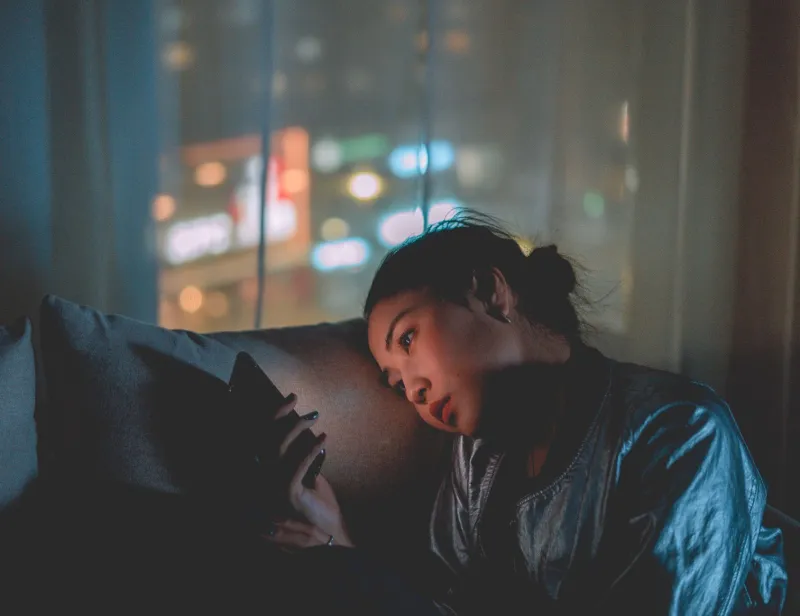
There's a specific kind of panic that hits at 2 a.m. when you realize you sent something you shouldn't have. A text too raw. A DM too honest. A tweet fired off in the middle of a feeling you weren't done having. Your thumb finds the delete button with the practiced urgency of someone pulling a fire alarm, and for a moment — just a moment — you exhale.
But here's the thing nobody warned us about when we all signed up for this digital life: that exhale is a lie.
The Button That Promised Everything
Platforms sold us on the unsend feature like it was absolution in app form. Instagram, iMessage, Twitter, Snapchat — they all offered some version of the same fantasy. You can take it back. You can reach through the wire and pluck your words out of someone else's feed before they land. It felt revolutionary, like a civilized solution to the oldest human problem: saying something before you meant to.
What they didn't mention — what the UI never bothered to make clear — is that deletion only controls your copy. The moment those words left your fingers, they were already somewhere else. On someone else's screen. In someone else's memory. Potentially in someone else's camera roll, captured in the half-second before you thought to reclaim them.
The unsend button didn't give us control. It gave us the feeling of control, which is a much cheaper product.
Screenshots Don't Forget
Ask anyone who's been on the wrong end of a viral callout and they'll tell you the same thing: it wasn't the original post that did the damage. It was the screenshot. The forward. The quote-tweet with commentary. The Reddit thread where strangers pieced together a timeline of everything you ever said, stitched neatly into a case against your character.
Digital archaeology is real, and it is patient. People have lost jobs over tweets from 2012. Relationships have imploded over DMs that were supposedly deleted years ago. Public figures have watched decade-old forum posts resurface with the kind of precision that only comes from someone who was looking. The internet doesn't forget — it just files things away until the moment they become useful to someone.
And it's not just malicious actors doing the digging. Sometimes it's an ex with time on their hands. Sometimes it's a journalist. Sometimes it's an algorithm that surfaces an old post at exactly the wrong moment, context-free and devastating.
The Psychological Weight of Permanent Impermanence
What does it do to a person to live with that knowledge? To understand, in your bones, that anything you've ever typed into a connected device could theoretically return?
Psychologists have started paying attention to what some are calling digital hypervigilance — a low-grade, chronic anxiety about online expression that shapes not just what people post, but how they think. When you know deletion is theatrical rather than real, you start self-editing before you even begin. You draft in your head. You run a risk assessment on your own feelings before committing them to a text box.
The result isn't just caution. It's a kind of emotional constipation that slowly poisons the well of authentic communication. You stop saying the real thing because the real thing is dangerous. You trade honesty for plausible deniability. You become fluent in the language of technically I didn't say that.
This is the hidden cost of living in a screenshot economy: we've made vulnerability feel like liability.
What We Keep Truly Private Now
Here's what's shifted in a way we don't talk about enough: the things people are genuinely keeping off-screen have changed dramatically. It used to be that private meant not posted publicly. Now private means not typed anywhere at all.
People are having the sensitive conversations in person again — not out of nostalgia, but out of necessity. Certain confessions only happen face-to-face now, because faces don't forward. There's been a quiet migration back to the handwritten note, the whispered admission, the conversation that exists in exactly two memories and nowhere else.
In some ways, that's beautiful. In other ways, it represents a failure of the technology that was supposed to connect us. We built a global communication infrastructure and then made it too risky to use honestly.
The Oversharing Paradox
Here's the contradiction that makes this whole thing so strange: we are simultaneously oversharing more than any generation in human history and becoming more guarded about the things that actually matter.
People will post their breakfast, their breakup, their therapy breakthroughs, their political rage — but they won't send the text that says I'm scared or I think I love you or I'm not doing okay. The high-stakes emotional content, the stuff that actually requires courage to express, that's what's going quietly underground. Because those are the words that hurt most if they're used against you.
So we get a feed full of performed vulnerability and a private life of genuine silence. The algorithm gets the theater. The people who matter most get nothing.
Learning to Live Without the Safety Net
None of this means you should stop communicating digitally. That ship sailed a long time ago, and the harbor's been paved over. But it does mean we need to get honest — real honest, Naked Word honest — about what we're actually doing when we type and delete and type again.
Every word you send is, in some sense, permanent. Not in the dramatic, everything-will-be-used-against-you way that makes people spiral, but in the quieter way that all human communication has always been permanent: once something is known, it is known. A deleted text might disappear from a thread, but it doesn't disappear from the person who read it. You can't unsend a feeling that already landed.
Maybe the answer isn't a better delete button. Maybe it's learning to mean what we say with enough integrity that deletion becomes less necessary. Maybe it's accepting that words — even digital ones — carry weight, and treating them accordingly.
Or maybe it's just this: stop trusting the exhale. The relief you feel after hitting delete is borrowed time. The only words that are truly safe are the ones you chose carefully enough that you wouldn't need to take them back.
Everything else is just pending.