Graveyard Shift: Digging Through the Digital Ruins of Everything You Almost Said
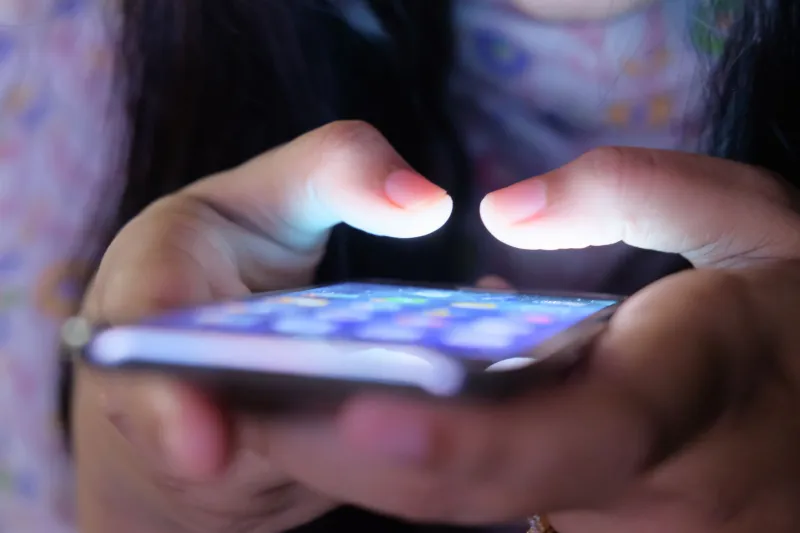
Somewhere on your phone right now, there's a graveyard.
Not the dramatic kind — no headstones, no wilting flowers, no weeping relatives. Just a quiet, invisible burial ground made up of text messages you typed and erased, Instagram captions you drafted and deleted, emails you wrote in a white-hot fury and then watched yourself talk yourself out of sending. Word by careful word, you killed them. And then you went to sleep pretending they never existed.
But they did exist. For a moment, they were the most honest thing about you.
The 3 AM Draft Is the Real You
There's a specific kind of courage that only shows up after midnight. Therapists have a word for it — disinhibition — but that clinical label doesn't quite capture what it feels like to be alone in the dark with your phone, finally typing the thing you've been swallowing for weeks. The anger at your mother. The longing for someone who doesn't know you're still thinking about them. The sentence that starts with I need you to know and ends somewhere you can't take back.
Dr. Priya Anand, a licensed therapist based in Chicago who works extensively with millennials and Gen Z clients, says she hears about these late-night drafts constantly. "People come in and describe writing something incredibly vulnerable — a message to an ex, a confession to a friend, sometimes just a social media post that said something true — and then deleting it," she says. "And then they feel this complicated mix of relief and shame. Relief that they didn't expose themselves. Shame that they couldn't."
That cocktail of relief and shame is worth sitting with. Because what we're really describing, when we talk about the 3 AM delete, is the precise moment the authentic self loses a fistfight with the performed self.
Your Drafts Folder Knows Your Secrets
Here's the uncomfortable thing about digital deletion: it's rarely as clean as we think.
Marcus Webb, a digital forensics consultant based in Austin who has worked on everything from corporate litigation to personal data recovery, has spent years excavating what people thought they erased. "Most people don't realize that 'deleted' on most platforms is a pretty loose concept," he explains. "Drafts get cached. Cloud syncs capture partial saves. Even a text you started typing and abandoned can leave metadata traces depending on your device settings."
But forget the technical forensics for a second. There's a more intimate archaeology happening that doesn't require any software at all — it just requires honesty. Think about the last time you wrote something real, felt the terror of it, and then destroyed it. What was the sentence? Who was it for? What would have happened if you'd actually sent it?
That's the dig site. That's where the real story lives.
Writers know this better than anyone. Novelist and essayist Dani Okafor, whose debut memoir dealt unflinchingly with her relationship with her estranged father, says her drafts folder contains at least three versions of every chapter she's ever published — and dozens of pieces she's never shown anyone. "The deleted drafts are the ones where I was writing for myself," she says. "The published stuff is me writing for a reader. Both are true. But the deleted ones are more true, in a way that scares me."
The Architecture of Self-Censorship
We like to think of censorship as something that happens to us — governments, platforms, employers with social media policies. But the most relentless editor in your life doesn't work for anyone. It lives inside your own skull, and it has been running the same risk-assessment algorithm since you were old enough to understand that saying the wrong thing has consequences.
Social psychologist research has long documented what's sometimes called self-silencing — the process by which people, particularly women and marginalized groups, suppress authentic expression to maintain social harmony or avoid retaliation. But the digital age has given self-silencing an entirely new infrastructure. We don't just bite our tongues anymore. We type the thing, read it back, feel the cold sweat, and then tap delete with the practiced efficiency of someone disposing of evidence.
And we do it constantly. A 2023 study from the University of Michigan found that Facebook users alone delete or significantly edit roughly 71% of the posts they begin composing before ever publishing them. Seventy-one percent. That's not a drafts folder. That's a mass grave.
What Fear Sounds Like in a Text Message
Pull up your Notes app right now. Not the shopping lists and the passwords you've slightly disguised — the other ones. The ones that start with I don't know how to say this or Maybe I'm wrong but or just a name, alone on a line, followed by a paragraph you eventually selected and deleted.
Those fragments are a map. They show you exactly where your courage ran out. They show you the borders of the self you're willing to be in public versus the self that exists when no one's watching — when it's just you and the backspace key at 3 AM, having it out.
Dr. Anand sees this as one of the defining psychological tensions of contemporary American life. "We live in this culture that simultaneously demands authenticity and punishes it," she says. "Be real. Be vulnerable. But also, be careful. Don't overshare. Don't make people uncomfortable. Don't say the thing that can't be unsaid. So people draft the authentic version, panic, and delete it. And then they feel alone, because they've just hidden the most honest part of themselves."
Learning to Read the Ruins
So what do you do with this? What's the move, once you've acknowledged that your deleted drafts contain a more complete portrait of your inner life than anything you've actually published or posted or sent?
Okafor has a practice she recommends to other writers, though she thinks it applies to anyone: "Keep a separate document — totally private, never to be shared — and paste your deleted drafts into it. Don't edit them. Don't clean them up. Just let them exist somewhere."
The goal isn't necessarily to eventually send them. It's to stop pretending you never wrote them.
Because here's the thing about all those words you killed at 3 AM: they were real. The anger was real. The longing was real. The need to be understood, the desire to be seen, the rage that had nowhere to go — all of it was real, and all of it deserved to exist somewhere other than the recycling bin of your own psyche.
You are not just the curated version of yourself that makes it past your internal editor. You are also the drafts. You are the deleted captions. You are the text message that sat in the compose window for forty-five minutes before you cleared it and typed never mind, forget it.
The graveyard on your phone is full of the truest things you've ever almost said.
Maybe it's time to start reading the headstones.