Sticky Floors and Five-Minute Sermons: Inside America's Last Real Confessionals
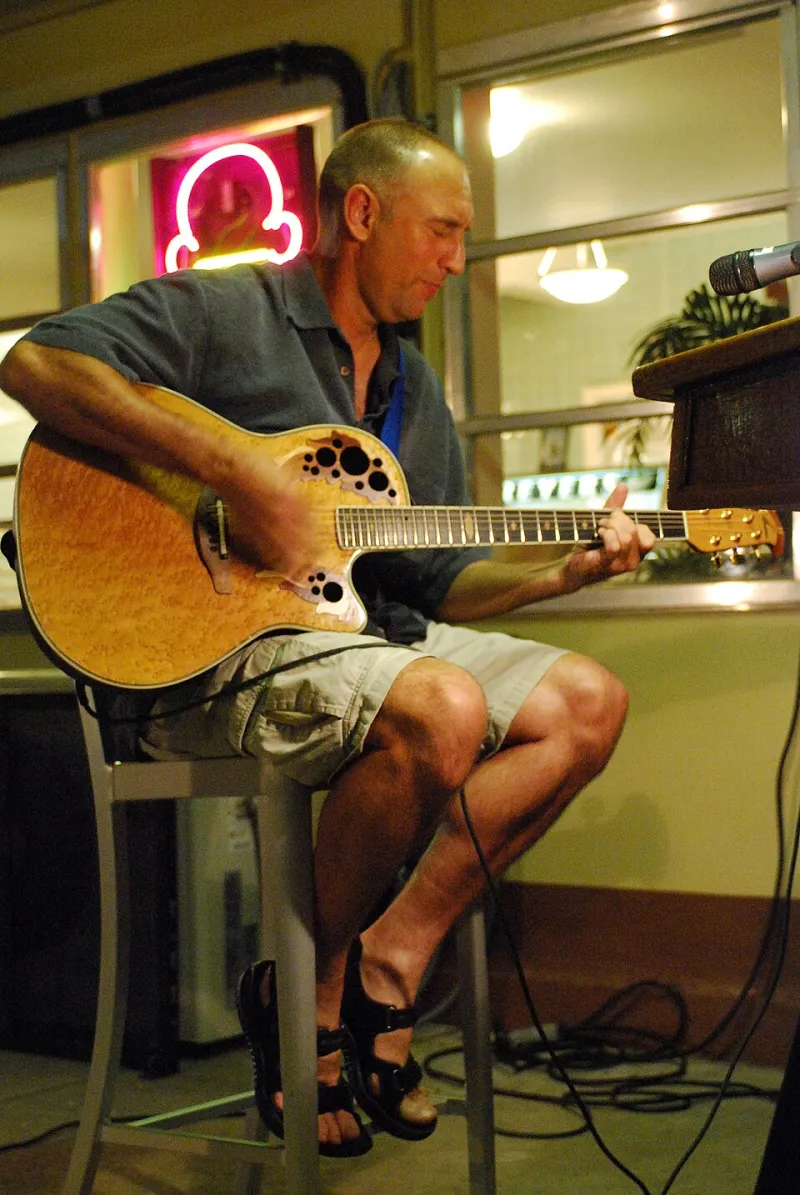
Photo: Petty Officer 2nd Class Cheryl Dilgard, Public domain, via Wikimedia Commons
The sign-up sheet fills up at 7:15 and the reading starts at 8, and by 7:20 there are already eleven names on it, which tells you something about how badly people in this city need to talk.
It's a Thursday night at a bar in Columbus — the kind with a stage the size of a pool table and a microphone that's been dropped so many times it's held together by electrical tape and faith. The rules, shouted over the espresso machine: five minutes. No heckling. What's said here stays here, mostly.
The Guy Who Read His Texts Out Loud
The third reader of the night is a man in his fifties named Ray, work boots,IPA sweat ring on the folding chair. He introduces himself by saying he's never done this before and he never will again, which is what everyone says, and then he reads — not a poem, not a story, but a series of text messages between himself and his son, who stopped calling two years ago.
He reads his own texts, then his son's replies, then the long silences in between, which he renders as stage directions: 'And then, nothing. For four months.' The room goes so quiet you can hear the ice melting in somebody's plastic cup. When he finishes, nobody claps right away. They just exhale, all at once, like a congregation at the end of a hymn.
You cannot tell me that's not church.
Where the Unsayable Goes When Nowhere Will Take It
Here's the trend line everyone knows: religious affiliation in America has been sliding for decades. Roughly three in ten adults now claim no religion at all. What fewer people talk about is where all that unconfessed weight went.
Some of it went to therapy, if you can afford it. Some went to podcasts and group chats. And a surprising amount of it went to open mics — the poetry readings, the storytelling nights, the comedy rooms with their 'first timer' sign-ups. Because the open mic solves a problem the dinner table never could: strangers have no stake in your respectability.
Your family needs you to be fine. Your coworkers need you to be stable. A room full of strangers at a bar in Ohio needs absolutely nothing from you except that you finish before the buzzer. That's the whole transaction. And it turns out that's the price of admission for the truth.
Five Minutes Is the Magic Number
There's a reason these readings work and holiday dinners don't, and I think it's the timer.
Five minutes is too short to build a case, so you can't lawyer your way out of what you came to say. It's too short to perform — there's no arc, no punchline machine, no room for the polished version. You get up there with one true thing or you get up there with nothing. The regulars can tell the difference instantly. So can you.
A woman named Dee reads a piece about her sister's overdose that she says she's 'still working on,' and it is a mess, structurally, and it is also the realest thing anyone will hear all week. She cries a little. She waves it off. She sits down. The next reader stands up and says, 'I can't follow that,' and then follows it anyway, because that's the deal — you take the baton of someone else's honesty and you try to match it.
Keep the Lights On in the Last Confessional
These nights are fragile. The bar could become condos. The host could move away. The whole fragile ecosystem runs on a guy who volunteers to run sound for free because somebody ran sound for him in 2009.
But as long as there's a folding table, a sign-up sheet, and five minutes, ordinary Americans are going to keep walking up to that microphone and saying the thing they've never said out loud — to their spouses, their mothers, themselves. Not because it's art. Because it's the only room left where nobody's asking them to be fine.